

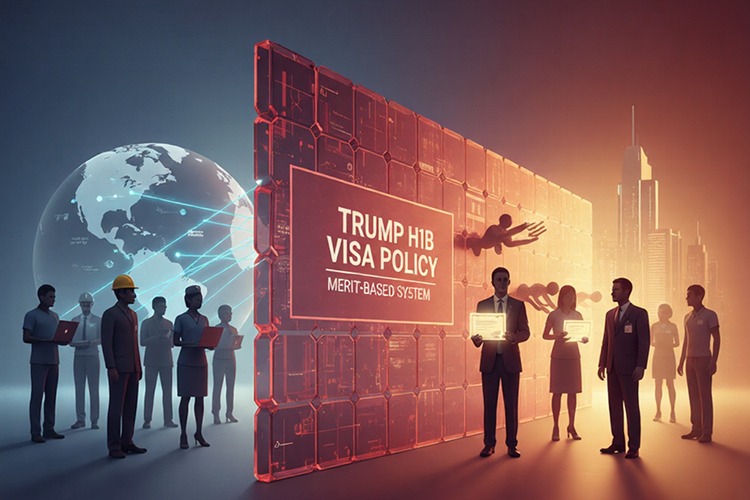
The Trump H1B Visa policy proposals are once again at the center of global debate, raising serious questions about how upcoming U.S. immigration reforms will reshape opportunities for skilled workers worldwide. For decades, the H1B visa has served as the primary pathway for highly skilled professionals especially in technology, engineering, and healthcare to work in the United States. But as new policy directions emerge under Donald Trump’s influence, the landscape may drastically change.
From stricter eligibility rules to higher wage requirements and priority for advanced-degree professionals, the Trump H1B Visa approach is expected to significantly alter how companies hire and how workers move across borders. Millions are closely watching software engineers in India, nurses in the Philippines, AI researchers in China, cybersecurity experts in Europe, and mechanical engineers across Africa.
Whether the shift becomes restrictive or simply more selective, skilled workers must prepare for a new era in U.S. immigration.

1. What Is Changing Under the Trump H1B Visa Approach?
The Trump administration has consistently advocated for a “merit-based immigration system.” While Trump has stated he supports high-skilled immigration, he also insists the system must:
- prioritize the “best and brightest”
- prevent low-wage job displacement
- block the misuse of H1B by outsourcing companies
- ensure U.S. workers are protected
Likely reforms under the Trump H1B Visa framework include:
✔ Higher minimum salaries for H1B workers
✔ Priority for advanced degrees, especially STEM
✔ More scrutiny for staffing/outsourcing companies
✔ Tighter requirements for remote or contract work
✔ Emphasis on high-paying and specialized roles
✔ Reduced approvals for entry-level applicants
These changes are not designed to eliminate the H1B systembut they will absolutely reshape who gets selected.
2. Which Industries Will Be Impacted the Most?

Different professional fields will feel the effects differently.
2.1 IT & Software Engineering – The Biggest Impact
The tech industry is the largest source of H1B workers, especially from India, Pakistan, China, and the Middle East.
Trump’s policies may:
- prioritize senior engineers, AI experts, and cybersecurity specialists
- reduce approvals for entry-level or low-wage IT workers
- strongly restrict outsourcing companies
- increase wages for tech-based sponsorship
This could dramatically reshape the global IT hiring ecosystem.
2.2 Healthcare & Medical Fields: Potential Relief
The U.S. continues to face shortages of:
- nurses
- medical technologists
- physicians
- researchers
The Trump H1B Visa framework may actually favor these professions due to national demand.
Countries most affected:
- Philippines
- India
- Nigeria
- Pakistan
- South Africa
Healthcare professionals may see improved prioritization.
2.3 Engineering & STEM Research: More Opportunities
Advanced fields such as:
- aerospace engineering
- robotics
- semiconductor manufacturing
- renewable energy
- biotechnology
…will likely benefit from increased demand.
The U.S. wants to expand innovation, and these roles are essential.
2.4 Business, Marketing & Non-STEM Fields: More Competitive
These sectors may face:
- fewer sponsorships
- higher scrutiny
- preference toward U.S.-trained applicants
Workers in non-STEM fields from Europe, the Middle East, and Asia may find fewer H1B opportunities.
3. Country-by-Country Breakdown: Who Is Affected Most?
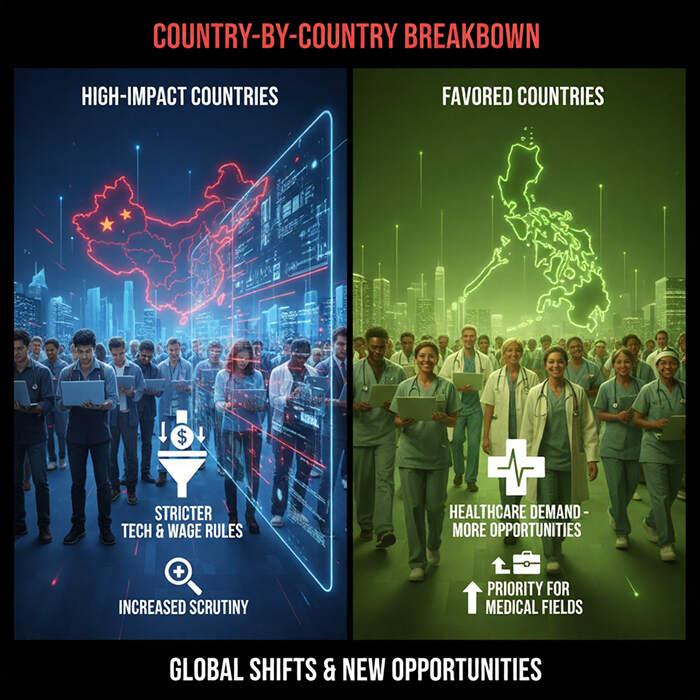
India: Highest Impact, Both Positive & Negative
India is the largest H1B applicant pool, especially in IT.
Expected changes:
- outsourcing-heavy applicants affected most
- U.S.-educated STEM graduates gain huge advantages
- entry-level programmers may struggle
- higher salaries become mandatory
India’s H1B landscape could completely transform under a Trump-led system.
China: Mixed Effects Due to Political Sensitivity
China is a major STEM powerhouse, but political tensions complicate visa processing.
Expected impact:
- high demand for Chinese STEM PhDs
- increased scrutiny for research roles
- potential slowdowns in security clearance
Philippines, Africa & South Asia: Healthcare Gains
The U.S. healthcare gap will drive demand for:
- nurses
- therapists
- medical technologists
These countries may benefit significantly from policy shifts.
Europe & Middle East: Specialized Tech Roles Favored
Countries such as Germany, France, UAE, and Saudi Arabia may see increased opportunities for advanced engineering and cybersecurity roles.
4. Will the H1B Lottery System Change?
A major question is whether Trump will overhaul the H1B lottery.
Possible changes:
✔ Move to a ranking-based system (merit-based)
✔ Points for:
- degrees
- salary levels
- field of study
- employer strength
✔ STEM and high-wage roles get priority
✔ Random selection reduced
This would significantly benefit:
- PhD holders
- advanced STEM specialists
- U.S.-educated master’s graduates
- senior professionals
While disadvantaging:
- entry-level workers
- outsourcing applicants
- non-technical roles
5. What Should Skilled Workers Do to Prepare?
To stay competitive under a stricter Trump H1B Visa framework:
✔ Gain specialized skills (AI, cybersecurity, data science)
✔ Pursue U.S.-based education
✔ Secure high-salary job offers
✔ Choose reputable employers
✔ Strengthen your immigration documentation
✔ Avoid depending solely on H1B
Many workers also choose to apply for the Diversity Visa Lottery as a backup plan. Although the H1B is employer-driven, the Diversity Visa gives a direct Green Card if selected.
Organizations like the US Green Card Office professionally handle Diversity Visa applications to help applicants avoid mistakes that cause disqualification.
6. The Global Ripple Effect What Happens Next?
Worldwide job markets will shift:
- Some countries may lose top talent to other nations instead of the U.S.
- Companies may set up more offices in Canada, Europe, or Asia
- Wages may increase due to stricter U.S. hiring rules
- Competition for H1B visas will intensify
The Trump H1B Visa proposals won’t just impact U.S. immigration they will influence global workforce strategies.