

A New Era for the H1B Visa Program
The H1B visa new rules for 2026–2027 represent one of the most significant updates to the U.S. skilled worker immigration system in recent years. Designed to prioritize highly paid, highly skilled professionals, these changes directly affect international workers, U.S. employers, startups, and global talent pipelines.
While the H-1B program remains a critical nonimmigrant work visa, stricter compliance standards, revised lottery procedures, and enhanced wage requirements are reshaping who qualifies and how petitions are evaluated. Understanding these rules early is essential to avoid costly mistakes and missed opportunities.
Why the H1B Visa New Rules Changed
The U.S. government introduced the h1b visa new rules to address long-standing concerns, including misuse of the program, wage suppression claims, and outsourcing abuse. Policymakers argue that reforms are necessary to protect U.S. workers while ensuring that truly specialized foreign talent continues to contribute to innovation and economic growth.
For 2026–2027, the focus is clear: quality over quantity.

Key H1B Visa New Rules for 2026–2027
1. Wage-Based Selection Model
One of the most impactful changes is the continued shift toward a wage-priority lottery system. Under this approach, registrations offering higher wages aligned with Level III or Level IV wage standards receive preference over lower-paid roles.
This change favors experienced professionals in tech, healthcare, engineering, and finance, while entry-level applicants face tougher odds.
2. Stricter Employer Eligibility & Compliance
Employers must now provide stronger evidence that:
- The role requires a specialty occupation
- The position is not created solely to obtain an H-1B visa
- The wage offered matches the job’s actual duties and location
Increased site visits and audits are expected through 2026–2027.
3. Narrower Definition of “Specialty Occupation”
Under the h1b visa new rules, degrees must be directly related to the job role. Generic degrees are less likely to qualify unless supported by detailed job descriptions and industry standards.
For example, a general business degree may no longer suffice for a data analyst role without substantial evidence of specialization.
4. Lottery Registration Integrity Measures
Duplicate or coordinated registrations across multiple employers are being more aggressively monitored. USCIS continues to invalidate suspicious registrations, which can result in:
- Petition denials
- Employer penalties
- Long-term applicant ineligibility
5. Higher Scrutiny for Third-Party Placements
Consulting firms and outsourcing companies face additional hurdles. Employers must now provide:
- End-client letters
- Detailed work location data
- Proof of employer-employee relationship throughout the visa period
Who Benefits From the New Rules

The h1b visa new rules clearly favor:
- Senior professionals with higher salaries
- Direct-hire employees (not contractors)
- STEM experts in AI, cybersecurity, healthcare, and advanced engineering
- Employers with strong compliance histories
Applicants with strong credentials and well-documented job offers are more competitive than ever.
Who Is Most at Risk
On the other hand, the new system poses challenges for:
- Entry-level applicants
- Low-wage positions
- Staffing agencies with multiple filings
- Candidates with unrelated degrees
- Employers relying heavily on third-party placements
Understanding these risks early allows applicants to explore alternative immigration pathways, such as the Diversity Visa (DV) Lottery, where selection is random and does not require employer sponsorship. Many applicants seek professional guidance from services like US Green Card Office to avoid errors in DV Lottery submissions.
H-1B vs. Green Card Lottery: A Strategic Comparison
While the H-1B visa is employer-dependent and highly competitive, the Green Card Lottery (Diversity Visa Program) offers a separate, permanent immigration route for eligible applicants.
Unlike the H-1B:
- No job offer is required
- Selection is random
- Family members can be included
Because DV applications are unforgiving of errors, many applicants choose professional assistance from US Green Card Office, which specializes exclusively in Diversity Visa submissions and compliance.
What Employers Should Do Now
To prepare for 2026–2027:
- Review wage levels carefully
- Strengthen job descriptions
- Avoid duplicate or mass filings
- Prepare for audits and site visits
- Seek expert immigration compliance advice
Employers that adapt early will remain competitive in the evolving H-1B landscape.
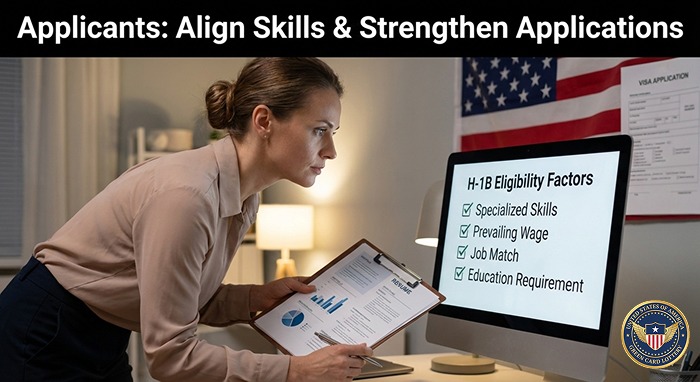
What Applicants Should Do Now
Applicants should:
- Target higher-skill roles
- Improve educational alignment with job duties
- Avoid unauthorized agents or fake job offers
- Consider alternative routes like DV Lottery or family-based immigration
Professional planning is more important than ever in the post-reform era.
Conclusion
The h1b visa new rules for 2026–2027 are reshaping how skilled immigration works in the United States. While the reforms aim to protect U.S. labor markets, they also raise the bar for foreign professionals and employers alike.
Success under the new system requires preparation, accuracy, and strategic planning. Whether pursuing the H-1B route or exploring alternatives like the Green Card Lottery, informed decisions and professional guidance can make the difference between approval and rejection