

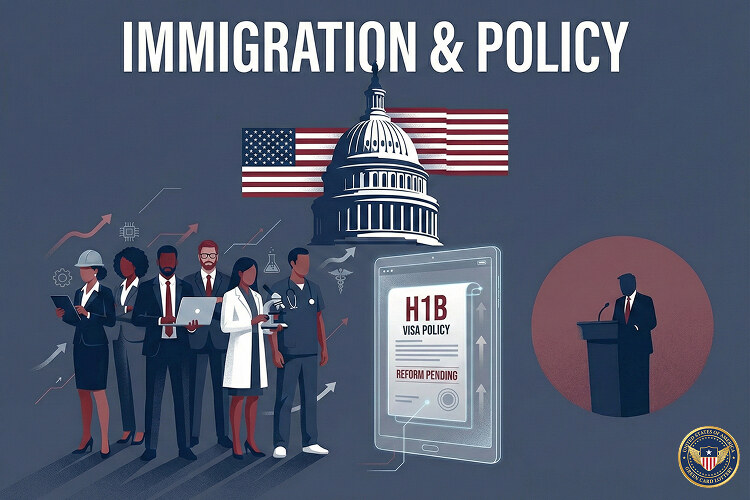
The Trump H1B Visa discussion is once again dominating U.S. immigration conversations as Donald Trump signals major changes to America’s skilled-worker visa system. With 2025–2026 shaping up to be a crucial period for immigration reform, millions of professionals from engineers to IT specialists, researchers, healthcare workers, and international graduates are trying to understand how these updates may affect their chances.
While nothing is finalized yet, Trump and his policy advisors have consistently emphasized merit-based immigration, higher salary thresholds, and stricter employer compliance. These signals provide strong clues on what applicants should expect if the Trump H1B Visa reform moves forward.
Throughout this guide, you’ll also find helpful notes on avoiding application mistakes. And although the US Green Card Office does not handle H1B visas, they are widely known for helping applicants apply successfully for the Diversity Visa Lottery, a professional service that many people consider if they want an alternative path to U.S. residency without relying on employer sponsorship.
Below is the complete breakdown of what the Trump H1B Visa may look like in 2025–2026.
1. What Is the Trump H1B Visa Plan?
Trump has repeatedly stated that he supports highly skilled immigration but wants a visa system that:
- Protects American workers
- Prioritizes top-tier talent
- Eliminates abuse of outsourcing loopholes
- Raises salary expectations
- Limits entry-level or low-skilled foreign hires
Therefore, the Trump H1B Visa direction is not about eliminating the program but tightening it to favor the “best and brightest.”
This includes possible reforms in eligibility, employer standards, and quota allocations.

2. Major Expected Changes Under the Trump H1B Visa System
Below are the most likely updates based on Trump’s previous policies, current statements, and insights from senior advisors.
2.1 Wage Level Increases
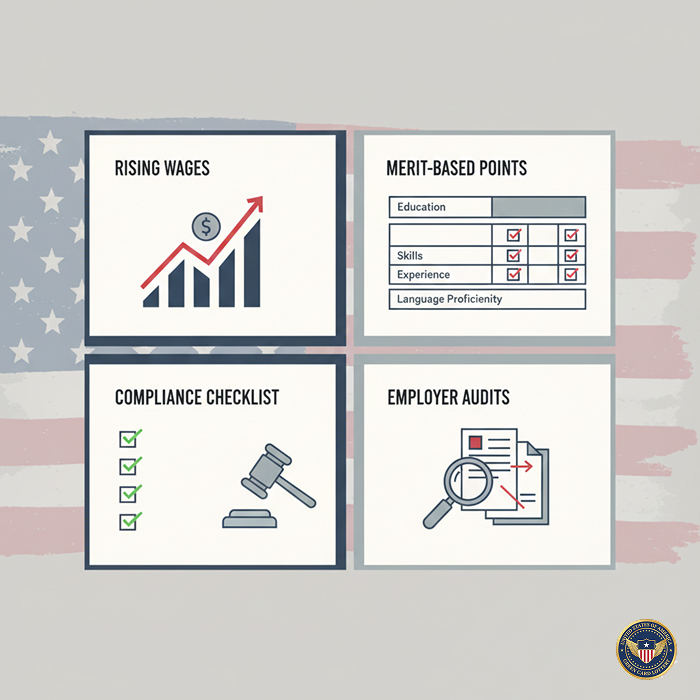
One of Trump’s biggest goals is pushing companies to hire H1B workers only if they pay significantly higher wages.
Expected outcomes:
- Higher minimum salary levels
- Priority given to top-paying jobs
- Reduction in lower-wage tech/IT H1B hiring
This step aims to discourage outsourcing companies from hiring workers cheaply.
2.2 A Shift Toward Merit-Based Selection
Trump has consistently pushed for a “points-based” immigration model.
Under the Trump H1B Visa proposal, priority may be given to:
- U.S.-educated graduates
- STEM degree holders
- PhD and Master’s degree holders
- Applicants with advanced technical skills
- Workers in AI, cybersecurity, robotics, healthcare, engineering
This could reduce reliance on the random lottery.
2.3 Restricting Outsourcing Companies
Trump’s previous term specifically targeted companies that:
- Bring foreign employees for training
- Send them back offshore
- Use the H1B program for cost-cutting rather than specialized labor
Expect:
- Strict worksite audits
- Employer verification visits
- New rules on subcontracting
2.4 Harsher Penalties for Employers
Companies may face:
- More compliance obligations
- Detailed wage structure reviews
- Scrutiny of job duties, titles, and locations
- Penalties for misrepresentation
This means employers must maintain solid documentation.
2.5 Possible Changes to the Annual H1B Lottery
Advisors have suggested:
- Lowering the number of visas
- Replacing the lottery with a ranking system
- Prioritizing high wages
While not guaranteed, this could reshape how the Trump H1B Visa selection works.
2.6 Stricter Remote Work Regulations
Trump’s advisors argue that remote or hybrid work undermines H1B oversight.
Possible outcomes:
- Location restrictions
- Worksite verification
- Additional wage adjustments for remote employees
3. Who Benefits Under the New Trump H1B Visa Rules?
Some groups may gain an advantage:
✔ STEM graduates
Especially in engineering, AI, biotech, computer science, and data science.
✔ U.S. master’s or PhD holders
Trump repeatedly supports allowing top graduates to stay.
✔ Applicants with high-paying job offers
Companies offering above-market salaries get priority.
✔ Workers in shortage occupations
Cybersecurity, medical research, robotics, green energy, and semiconductor manufacturing.
4. Who Will Face Challenges Under Trump’s H1B Vision?
Groups that may struggle:
❌ Junior or entry-level workers
Without strong experience, ranking below advanced candidates.
❌ Non-STEM professionals
Humanities and arts applicants may be deprioritized.
❌ Consulting/outsourcing hires
This group faces the most risk under the Trump H1B Visa tightening.
❌ Workers dependent on low-wage sponsors
As wage levels increase, employers may hesitate.
5. Impact on F1 Students and OPT Workers
F1 students hoping to transition into H1B may face:
- Tighter pathways from OPT → H1B
- Reduced chances for non-STEM programs
- Higher competition due to selective ranking
- Additional employer verification
However, STEM OPT holders are positioned more favorably.
6. How Employers Will Be Affected in 2025–2026
Employers may need to:
- Increase salary offers
- Justify specialty occupation need
- Maintain strict documentation
- Prepare for workplace inspections
Small companies relying on H1B workers may struggle the most.
7. Alternative Immigration Options While H1B Rules Tighten
With a stricter Trump H1B Visa environment, applicants explore alternatives:
- O-1 Visa (Extraordinary Ability)
- EB-2 NIW (National Interest Waiver)
- L-1 intracompany transfer
- E-2 investor visa (for treaty countries)
- Diversity Visa (Green Card Lottery)
The Diversity Visa is one route many applicants consider because it does not require employer sponsorship.
This is where professional services like the US Green Card Office come in. They help applicants correctly apply for the Green Card Lottery and avoid common entry mistakes, a reliable option for those wanting a backup plan alongside their H1B pursuits.
8. How to Prepare for Possible Trump H1B Visa Reforms
Here’s what applicants can start doing now:
✔ Improve your profile
Take advanced certifications, technical courses, or higher degrees.
✔ Target high-quality employers
Companies that can meet wage requirements will have stronger approval chances.
✔ Strengthen documentation
Immigration cases under Trump historically required more proof.
✔ Stay updated
Policy changes happen quickly. Following updates is crucial.
✔ Apply for the Diversity Visa Lottery as a backup
Many professionals prefer having dual pathways.
The US Green Card Office accepts applications year-round and helps applicants avoid mistakes that lead to disqualification.