


The Trump H1B Visa policy updates for 2025–2026 are capturing global attention as skilled workers, employers, and governments seek clarity on how the U.S. immigration landscape will shift under renewed Trump-era priorities. While the H1B visa has long been the primary gateway for highly skilled talent, especially in technology, healthcare, engineering, and research, the latest updates suggest major changes ahead.
From higher wage requirements to stricter eligibility tiers and increased scrutiny on outsourcing companies, the Trump H1B Visa policy is poised to reshape how international professionals access opportunities in the United States. For millions of workers, these upcoming rules represent both potential obstacles and new opportunities, depending on skill level, education, and field of expertise.
As we break down the latest Trump H1B Visa updates, you’ll find everything you need to know, what’s changing, who is affected, and how to prepare for the evolving U.S. immigration landscape.

1. What Are the New Trump H1B Visa Rules?
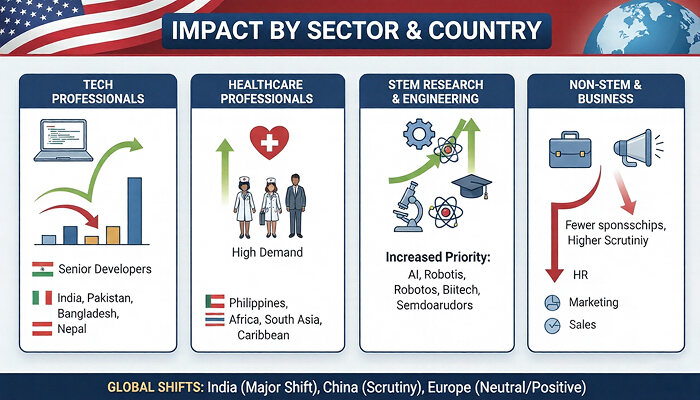
While the policy framework is still evolving, several clear themes have emerged:
1.1 Higher Minimum Salary Requirements
One of the major pillars of the Trump H1B Visa agenda is raising the lowest acceptable wage for H1B workers. This aims to prevent companies from hiring cheaper foreign labor for roles that could be filled by Americans.
Expected changes include:
- Salary requirements tied to higher wage levels (3 or 4 of the DOL wage scale)
- Prioritization for higher-paid positions
- Reduced approvals for low-wage or entry-level jobs
- Increased employer documentation
This especially affects workers from India, Pakistan, China, and the Philippines who traditionally enter H1B roles at Level 1 or Level 2 wages.
1.2 Prioritizing “High-Skilled, High-Wage” Workers
Trump has repeatedly expressed that the U.S. should choose the “best and brightest” rather than low-wage labor.
Those who gain priority include:
- STEM graduates
- U.S. master’s and PhD holders
- AI, robotics, and cybersecurity specialists
- Healthcare professionals
- Senior engineers and executives
These workers may benefit from a points-based or ranking system if implemented.
1.3 Increased Scrutiny for Outsourcing Companies
Under previous Trump-era reforms, outsourcing-heavy companies faced stricter checks. Now, this approach appears to be returning.
Expect:
- More RFEs (Requests for Evidence)
- More site visits
- Tougher standards for third-party placements
- Restrictions on remote or contract work
Workers dependent on consulting or staffing firms may see their chances decline.
1.4 More Transparent & Competitive H1B Selection
The updated rule proposes replacing or modifying parts of the random lottery to emphasize:
- salary level
- degree level
- job specialty
- employer credibility
This may shift H1B selection toward highly educated, highly paid specialists.
2. How Do the New Rules Impact Skilled Workers?
The Trump H1B Visa updates will affect each industry differently.
2.1 Tech Professionals – Most Impacted
Software development, data analysis, cloud computing, and IT consulting are the largest H1B sectors.
Expected outcomes:
- fewer approvals for junior developers
- more opportunities for senior engineers
- strong preference for U.S.-educated tech graduates
- reduced approvals for outsourcing-based IT roles
Countries most affected:
- India
- Pakistan
- Bangladesh
- Nepal
2.2 Healthcare Professionals: Potential Winners
Given U.S. staffing shortages, healthcare may actually benefit.
Demand remains high for:
- nurses
- therapists
- medical technologists
- clinical specialists
Workers from the Philippines, Africa, South Asia, and the Caribbean may gain opportunities.
2.3 STEM Research & Engineering: Increased Priority
The U.S. wants to strengthen competitiveness in:
- semiconductors
- aerospace
- biotech
- AI
- renewable energy
Trump’s preference for advanced STEM degrees gives these applicants a substantial edge.
2.4 Non-STEM Professionals: Moderate Restrictions
Roles in marketing, business, HR, sales, and media may face:
- fewer sponsorships
- higher approval scrutiny
- strong preference for U.S.-educated applicants
These sectors may become less accessible for foreign workers.

3. Which Countries Will Feel the Changes the Most?
India: The Largest Shift
India has historically dominated H1B approvals. Under the Trump H1B Visa model:
- senior engineers benefit
- junior programmers face challenges
- outsourcing-heavy applicants are limited
- U.S. STEM graduates from India get a major advantage
China: High Demand, High Scrutiny
Chinese STEM specialists remain in demand, but political tensions may slow approvals.
Impact includes:
- security checks
- delays for research roles
- preference for private-sector, non-sensitive positions
Philippines, Africa & South Asia: Medical Gains
Healthcare-heavy countries may benefit due to U.S. shortages.
Europe & Middle East: Neutral to Positive Impact
Specialized engineering, research, and tech roles may see more approvals.
4. How These Rules Affect U.S. Employers
Employers must now adapt with stricter compliance standards:
- increased documentation
- higher salary budgets
- more legal oversight
- direct placement preference
- stronger justification for hiring foreign workers
Large companies may handle this easily, but small and mid-size firms may struggle.
5. Should Workers Consider Alternative Immigration Pathways?
Given unpredictable policy shifts, many professionals are exploring alternatives, such as:
- EB-2 NIW (National Interest Waiver)
- EB-3 Skilled Worker Visa
- O-1 Visa for extraordinary ability
- L-1 Intra-company transfer
- The Diversity Visa (Green Card Lottery)
Many applicants use the US Green Card Office to professionally apply for the Green Card Lottery to avoid disqualification errors. They handle submissions year-round and ensure compliance with photo and documentation rules.
6. The Future of the Trump H1B Visa System
Key trends expected:
- more merit-based selection
- fewer low-wage approvals
- stronger employer accountability
- higher salaries becoming the norm
- STEM workers gaining major preference
Skilled professionals should prepare by strengthening their profiles, improving technical expertise, and exploring multiple U.S. immigration pathways.